Paid in euros, living in pounds (and I wouldn't change it)
Iraq devalued its currency overnight. What I learned from earning in one currency and spending in another, and why, even if you live in pounds, it happens to you too, just more slowly.
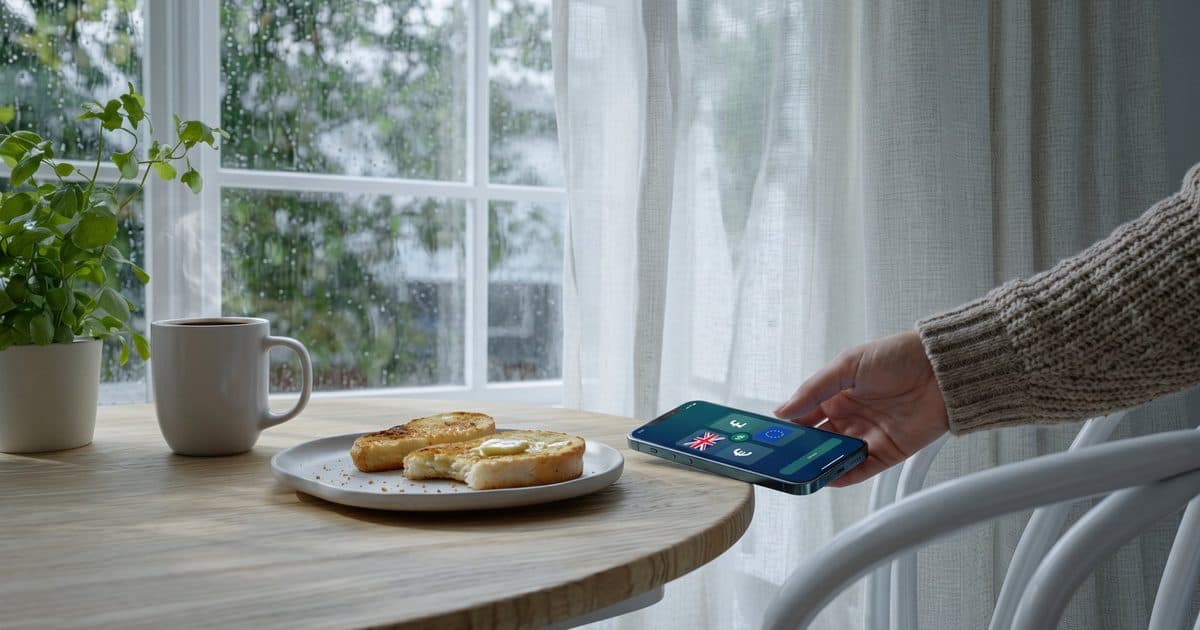
The first thing I check most mornings isn't the weather, it's the euro to pound exchange rate. I already know the weather in England: it's going to rain.
There's a reason. Where I live, the shopping, the bills and everyday life are all in pounds. But my income never arrives in pounds: I work for a German client and get paid in euros. And my active trading on the stock market is in dollars.
Having my money in several currencies isn't something I planned: life just took me down that road. For a while I saw it as a nuisance, but now I'm sure it's one of the best things that could have happened to me. Last week, a piece of news reminded me why.
The risk of having everything in one currency
I read that Iraq had devalued its currency. Devaluing means the government decides its currency is worth less against another one, usually the US dollar. Overnight, the dinar lost around 13% against the dollar.
I thought about the people there, who woke up with the same salary, the same savings and fewer things they could buy with them. Everything that comes from abroad (food, medicine, phones, clothes) goes up in price. And worse has happened not long ago: in 2023, the Argentine peso lost more than half its value against the dollar in a single day, and Lebanon's official currency lost 90% in one go.
What if it happened to me? I could choose: which currency I pay in and when I convert. Someone who earns and saves in dinars hasn't been able to choose anything. That difference doesn't make me rich. It makes me less fragile.
I learned the value of holding several currencies the hard way
Between 2020 and 2021 I worked for an American client, got paid in dollars and lived in pounds. At the time I had no interest in keeping dollars, so every month or two I converted the lot into pounds. For every 1,000 dollars I got about 750 pounds.
In September 2022, when I was no longer paid in dollars, the pound sank until it was worth almost the same as a dollar. Those same 1,000 dollars would have got me more than 900 pounds. I regretted, very much, converting everything so early, even though I didn't need the money at the time. The pound politely waited until I stopped earning in dollars before it sank.
Of course, it could have gone the other way: nobody knows where a currency is heading. That's why I now convert little by little, only what I need, instead of everything at once. That way I'm not betting the exchange rate on a single day.
My ideal situation
I wouldn't give up having several currencies. What I'm missing is a source of income in one more currency: the pound, the one I spend in. Ideally I'd earn in pounds what I spend each month, so I wouldn't need to convert at all. For now, that's not the case.
In the meantime, I consider myself lucky to have savings and investments in euros, dollars and pounds. When one of my currencies has a bad year, the others don't usually have one at the same time. They're also big currencies, which makes me feel safer. They move too, like the pound in 2022, but it's rare for them to lose half their value in a day.
What I've learned from all this
- Measure your money in the currency you live in. My expenses are in pounds, so what matters to me is how many pounds my euros or dollars buy. If all your money is in another currency and that currency falls, you can buy less where you live. If you keep part of it in the currency you spend in, that part doesn't move.
- Diversifying isn't just spreading your money across companies. It's also not depending on a single country, a single type of asset, a single client or a single currency.
- Don't keep it all in cash. Money sitting in an account is what suffers most when a currency falls. Assets (a home, shares in companies that sell all over the world) tend to hold up better, because when the currency is worth less, their price in that currency tends to go up. They don't spare you the blow, but they soften it.
This isn't financial advice: it's what I do and why. In case it's useful, to convert I use Revolut, from my phone and at the official rate. The free plan has a monthly conversion limit and a weekend surcharge. I pay for the Metal plan because it's worth it for me. If you open an account with my link, I get something and it costs you nothing.
The question I'll leave you with
If your currency lost 13% tomorrow, like the dinar, how much of your money would feel it?
If you live in pounds, it's unlikely to happen overnight. Devaluation reaches you more slowly: it's called inflation, and it does the same thing without making the news. Start by checking whether your income has kept pace with prices.
Where all this comes from
Iraq: official rate moved from 1,320 to 1,520 dinars to the dollar from 7 October 2026, street rate and economists' comments. Asharq Al-Awsat, Associated Press and The National.
Argentina: official peso devalued from about 366 to 800 to the dollar, 12 December 2023. Buenos Aires Times.
Lebanon: official rate moved from 1,507.5 to 15,000 Lebanese pounds to the dollar, 1 February 2023. Al Jazeera.
United Kingdom: record low against the dollar in September 2022 (ABS-CBN, with Reuters).
Steer your money, or it'll steer you.
Did this article help?