Are automatic currency orders worth playing with?
My app lets me set my euros to convert by themselves when the pound drops. I pictured myself a millionaire in my pyjamas, so before diving in I tested it against fifteen years of data. The result wasn't what I expected.

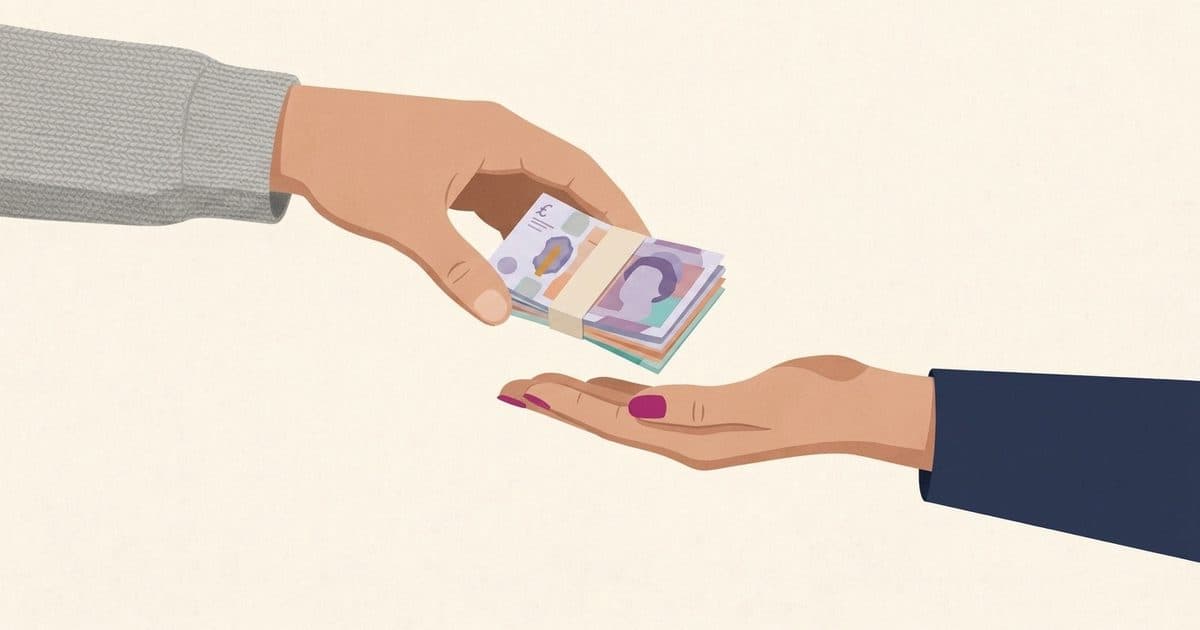
My banking app has a dangerous feature for someone like me: you can tell it "when the euro reaches 0.88 pounds, convert €2,000 for me" and it handles the rest. You go to sleep and, if the condition is met, it does the exchange for you.
The first time I saw it, I felt like a currency trader, in my pyjamas, from the sofa. And I thought: what if I only convert when the pound is cheap? And what if, when it goes up, I switch back to euros? My eyes turned into cartoon eyes with dollar signs in them. I could already see myself as a millionaire.
Before doing it, I did what I always do: the maths.
The rule
Looking at the chart, it's easy to see where the orders should have gone, but that's cheating. So I tested a rule you can follow without a crystal ball: convert the first time the rate is 3% above its average over the last 12 months and, from then on, every time it moves 3% in my favour from the last conversion.
I took each day's high and low from 2011 to 2025 and simulated the orders the way they really work: if the level falls between the day's low and high, the order fires and converts at that price. I tested three-year and five-year periods, starting on the 1st of every month.
The result: it depends where you start
I convert every time the rule is met: out, back and out again. If the money is still in the other currency at the end of the period, I don't convert it: I work out what it's worth in my currency at that day's rate, so I can compare.
What you gain in total over each period, compared with leaving it alone, before fees:
| Money in |
Playing with |
3-year period |
5-year period |
Worst and best, 5 years |
|---|---|---|---|---|
| € | £ | +3.0% | +3.0% | -18% to +27% |
| £ | € | +3.0% | +6.1% | -6% to +16% |
| € | $ | +5.6% | +9.3% | 0% to +17% |
| $ | € | +2.1% | -3.5% | -19% to +24% |
| £ | $ | +4.2% | +9.6% | +3% to +30% |
| $ | £ | +3.0% | +0.7% | -24% to +23% |
With the same currencies, the result changes depending on which one you start with. Over five years, anyone who started in dollars, the currency that rose most over those years, broke even or lost out: going there and back took them out of the strong currency. That isn't a rule that works, it's having bet on the trend of those fifteen years. Nobody knows the trend of the next fifteen.
And there's a catch: because you only convert if you gain, that moment often never comes. Over five-year periods, the money ended up stuck in the other currency between 1 in 4 and 8 in 10 times, depending on the pair, and what it's worth depends on that day's rate.
Given more time, it does better. From 2011 to 2025, €10,000 played against the pound would have ended up as €13,913 with no fee: 39% more in fifteen years. With a 1% fee, 9% more. With 3%, €6,698.
What the fee takes
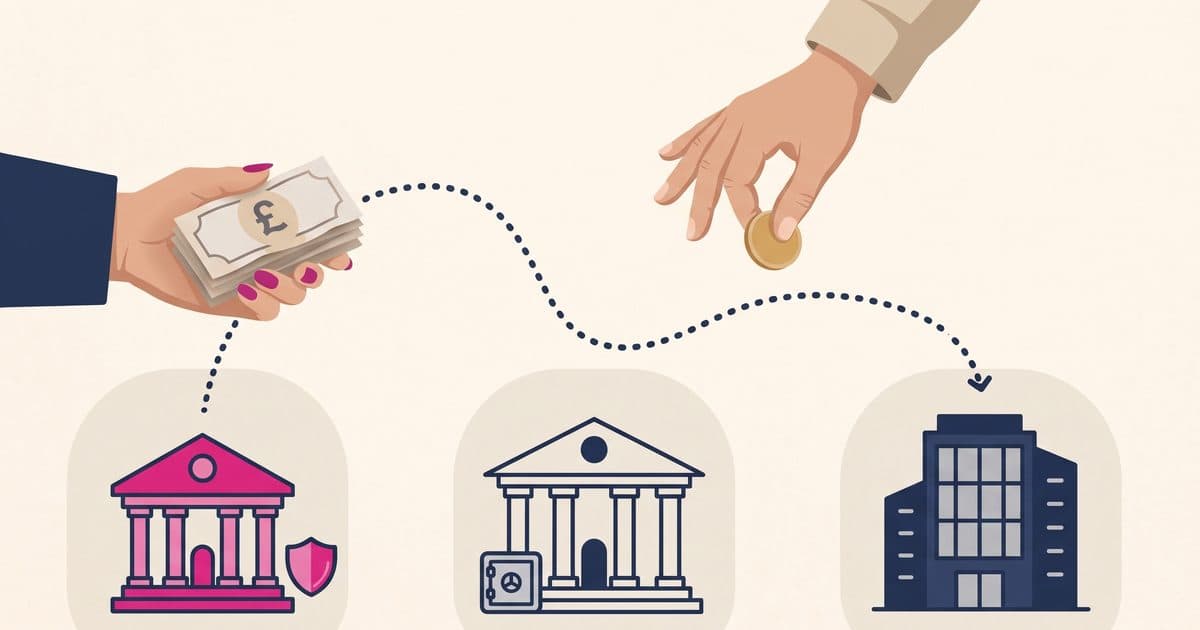
The order fires two to eight times, and each one pays. At 1%, the typical result is already close to nothing or a loss. At 3%, you typically lose between 9% and 21% over five years: what a savings account would give you, but in reverse.
And 3% is what plenty of banks charge, hidden in an exchange rate worse than the real one. Do you know what yours charges? I use Revolut: a rate close to the real one and, depending on the plan, no fee. With my link I get something and it costs you nothing.
So how do people make money from forex?
Forex is the currency market, and some people make a living from it. But they don't do what I tested:
They pay almost no fee to convert: hundredths of a per cent.
They trade with borrowed money. A retail trader can move up to 30 times what they put in: a 1% move is 30% of their money. Up and down.
They earn the interest difference: they borrow in a currency with low rates and hold another with high rates. It works until the currency they hold collapses.
And the one who wins for sure is whoever charges the fee. According to the European regulator, between 74% and 89% of retail accounts trading this way lose money.
A word on tax
In the UK, gains on personal foreign-currency bank accounts aren't taxed, but check with your adviser. If you're tax resident in Spain, every time you convert foreign currency back into euros there may be a gain or loss for your tax return: going there and back also means more paperwork.
So what do I do?
With all the results in front of me, it's clear: it isn't worth it for me. An easy-access savings account pays over 4% a year in the UK right now, and between 2% and 3% in Spain. Over five years, that's between 10% and more than 20%. In the typical case, the rule doesn't go past 10%.
I convert what I need, bit by bit and with no fee. It's the only gain that's guaranteed.
My energy goes into other investments, and another kind of trading, that pay me better. Automatic orders, at most, as a treat.
The pyjama-clad currency trader stays on the sofa.
This isn't financial or tax advice: it's what I worked out and what I do.
Where all this comes from
Exchange rates: each day's high, low and close from Dukascopy, a Swiss bank that publishes its market data, from 2010 to 2025 (2010 only for the first year's average).
UK banks: Barclays and Lloyds, March 2026, published by a competitor.
Revolut: limits by plan.
Forex: ESMA, the European markets regulator, on retail accounts and maximum leverage.
Savings accounts: DepositScout and HelpMyCash, October 2026.
Tax: HMRC, CG78320; Spanish tax authority ruling V1613-25, September 2025, in Iberley.
Steer your money, or it'll steer you.
Did this article help?