My great-grandfather owned cinemas and I have a job
I've spent years watching internet gurus I've never met, when the example was in my own family all along. And the most valuable thing he had wasn't money: it was knowledge that never reached me.
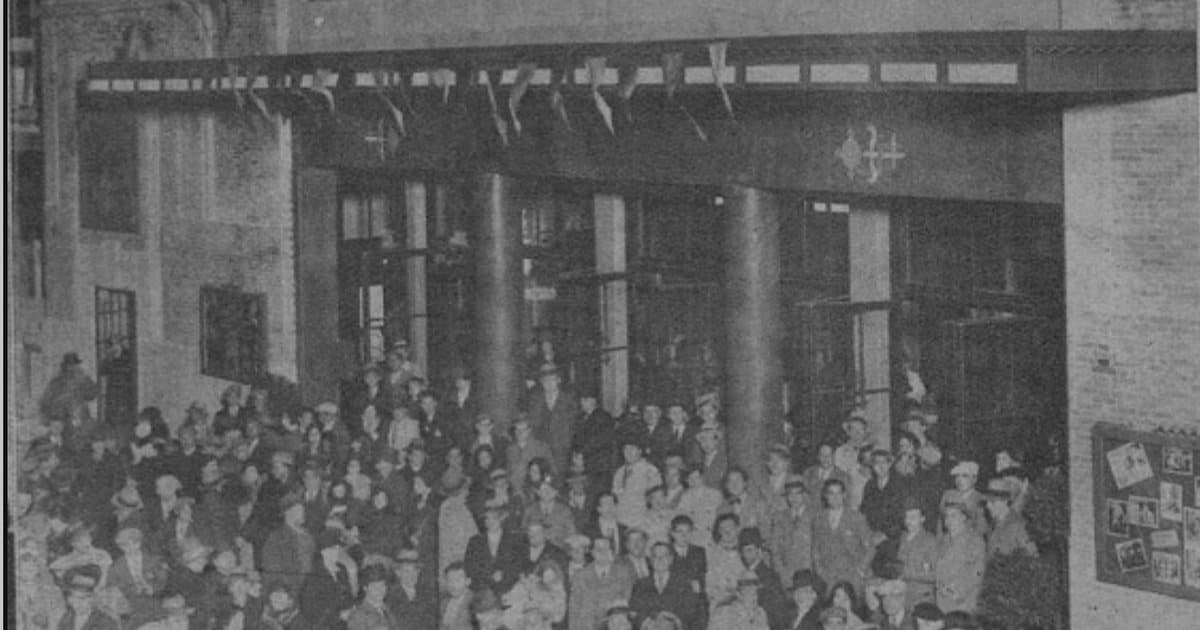
Opening of the Capitol cinema in Valencia, March 1931. Photo: Desfilis / Las Provincias, via Valencia en blanco y negro.
I've spent years watching finance gurus on the internet. People I've never met, explaining how you build freedom from inside a car that may or may not be theirs.
Then one day it hit me that the perfect example was in my own family: I did know someone who had reached financial freedom.
My great-grandfather, with my great-grandmother beside him, started from nothing and built something big: cinemas, buildings, shops. He built enough that his children could choose whether to work. The next generation inherited a share of it, but split between more people. And I, a generation later, work like almost everyone else, hoping to learn what he knew how to do: build.
Before this sounds like something it isn't: I don't see a penny of that. I work and I pay my own way. So this story isn't about an inheritance that changed my life, but about something far more interesting: the knowledge that built it in the first place.
Assets and liabilities, in plain English
For this article I'm using Robert Kiyosaki's definition. An asset is something that puts money in your pocket. A liability is something that takes it out. It isn't the accounting definition, but it's the one that helps me think about my own finances.
By that rule, my car is a textbook liability: insurance, petrol, servicing, and on top of that it's worth less every year.
My great-grandfather's cinemas were the opposite. Every week people came in, bought a ticket, and the building was still his when the film ended.
Money that arrives all at once
For years my plan for retiring early was winning the lottery. Every ticket bought me a daydream, which is worth something, but it was a liability with hope built in: it took money out every week and the odds of giving it back were laughable. And if I had won, a prize is an amount that lasts until it runs out: unless you turn it into an asset, it generates nothing on its own.
An inheritance works the same way. In my family, the generations that followed set about preserving what was there. Preserving takes skill too, but it isn't the same as carrying on building. Money that stops growing while it's divided between more people sooner or later becomes too small to hold up the same life. So at some point, some generation has to start building again.
Is there a way this could pay for itself?
It's the question I now ask every time I buy something. There isn't always an answer, but something has already shifted.
I tried it with the car. In the last post I did the maths, but I never asked this question. There are apps for renting it out by the hour and the idea seemed perfect: it sits parked twenty-two hours a day, let it pay for itself. It didn't work: in my city the key handover and the driver checks couldn't be automated, and I wasn't willing to invent a second job meeting strangers every time.
Other people manage it. I know someone who lets her house on Airbnb every time she goes away. Someone handles the cleaning and the beds, so she doesn't lift a finger: her house pays her to go on holiday. It's the small version of the cinemas: something that works while she isn't there.
A flat you rent out is only an asset if the rent covers the mortgage, the service charge, the insurance, the tax and the repairs, with something left over. If it doesn't, what you have is a liability with a tenant in it. It going up in value is nice, but you only collect that if you sell.
There's a smaller version: solar panels don't put money in your pocket, but they stop taking it out, which in practice amounts to the same thing.
What I'm turning over now is digital assets: you do the work once and get paid many times. A platform, a course, a template, a book. Something that keeps working on the days you're in bed with flu.
I'll be straight with you: as things stand, this website is a liability. It costs me money and brings in none. I've wanted to build it for a long time and I love doing it, so for now it's a hobby, but one day I want it to be an asset.
Whether your own home is an asset or a liability I'll leave for another post: opinions differ and it deserves the maths done slowly.
Where I'm going with all this
There's a line attributed to Warren Buffett: if you don't find a way to make money while you sleep, you'll work until you die.
It sounds like something printed on a mug, but my family is the footnote. My great-grandfather's children got to choose whether to work because their parents found that way. I work because that way got lost along the road, as it does in almost every family.
So my goal has a specific shape: for what comes in to stop being tied to my hours, and to cover what goes out. Not so I can walk away tomorrow, but so that working becomes a choice.
The plan, in one line: get rid of the liabilities I can, turn into assets the ones that will let me, and have the assets pay for the ones that stay.
Because months of "no", the time you can afford to say no without anything falling on your head, aren't bought by saving. They're bought with assets.
If I ever manage to build something like what my great-grandfather built, what I want to pass on isn't just the assets. I want to pass on the knowledge that created them. And you can read it here, because I'm going to document the way.
Steer your money, or it'll steer you.
Did this article help?